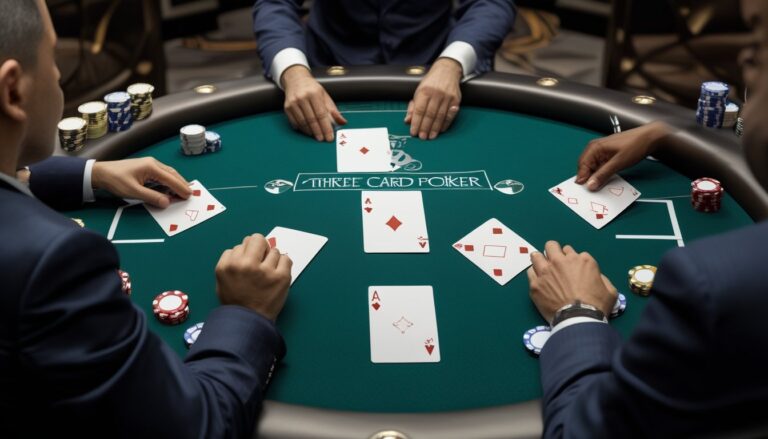
Reading poker cards is not just about luck; it requires skill in understanding card values, combinations, and the patterns that develop during the game. The key technique in reading poker cards is to combine knowledge of card rankings with the ability to observe opponents’ betting behaviors and tendencies, giving players a strategic edge. Mastering this skill allows players to make more informed decisions rather than relying purely on chance.
Successful players also focus on psychological cues, such as timing, betting size, and reaction patterns, to infer the possible cards their opponents hold. This approach turns poker into a game of observation and analysis, where subtle signals become valuable information. Developing this skill can significantly improve one’s chance of winning in both live and online poker environments.
Understanding Poker Card Reading
Poker card reading involves more than just recognizing cards. It requires analyzing betting patterns, player behavior, and possible hand ranges. Mastery of these elements helps players make informed decisions and gain an advantage.
Definition of Poker Card Reading
Poker card reading, often called hand reading, is the process of estimating an opponent’s potential cards based on available information. This includes the community cards, betting actions, and known player tendencies.
Unlike guessing, it involves logical deduction and probability analysis to narrow down possible hand combinations. Players assign ranges—groups of likely hands—rather than pinpoint exact cards. This skill evolves through experience, observation, and study of common betting patterns.
Importance in Competitive Play
In competitive settings, poker card reading is crucial for making strategic moves. It enables players to identify when to bet, call, raise, or fold by estimating opponents’ strengths.
Without this skill, players rely mostly on luck, putting them at a disadvantage. Skilled readers predict opponents’ actions and adjust their own play accordingly, leading to more consistent wins. Understanding stack sizes, position, and betting sequences enhances this ability, contributing to long-term success.
Core Skills Required
Effective poker card reading combines observation, mathematical reasoning, and psychological insight. Players must track betting trends and timing, which reveal opponents’ confidence or hesitation.
Critical skills include understanding hand ranges, board texture, and positional advantage. Players interpret how different starting hands interact with community cards and use this to inform decisions. Continuous practice behind these skills is essential to refine accuracy and speed in hand reading.
Fundamental Techniques for Reading Poker Cards
Understanding how to interpret opponents’ actions and behavior provides crucial insight into their possible hands. Paying close attention to betting sequences, player reactions, and past game patterns helps build an accurate picture of what cards others might hold.
Recognizing Betting Patterns
Betting patterns reveal a player’s strategy and hand strength over time. Consistent bets or raises in similar situations often indicate certain types of hands. For example, frequent small raises might suggest a drawing hand, while large, sudden bets may indicate strong confidence in the hand.
Players typically bet differently when bluffing compared to when holding premium cards. Tracking how much and when they bet, as well as how they respond to raises, narrows down their potential holdings. The size of bets relative to the pot also offers clues; overbets can signal strength or an attempt to intimidate opponents.
Using a mental or written record of these patterns helps in estimating opponents’ ranges during future hands.
Observing Player Behavior
Physical tells and timing provide additional layers to reading hands. How long a player takes to act can indicate uncertainty or confidence. Quick calls often mean weak holdings, while hesitation might reveal a tough decision related to a strong but vulnerable hand.
Facial expressions, posture, and eye contact are subtle but valuable clues. Nervous habits, such as fidgeting or avoiding eye contact, can suggest discomfort. Confident or aggressive body language might align with strong cards.
Observing these behavioral cues alongside betting patterns improves the accuracy of hand reading by combining psychological insight with strategic analysis.
Analyzing Past Hands
Reviewing prior hands played against the same opponents sharpens hand reading skills. Patterns in their play style emerge over time—whether they favor tight, cautious play or aggressive, risk-taking moves.
By recalling how opponents acted in similar board situations and what cards they revealed, one can better predict their tendencies. For instance, if a player often bluffs on certain board textures, future actions on similar boards can be interpreted with more skepticism.
Maintaining a mental database of these tendencies is vital. It allows players to tailor their own strategy and anticipate opponents’ likely holdings based on historical behavior.
Psychological Aspects of Reading Poker Cards
Understanding the mental tactics behind poker can reveal important clues about opponents’ hands. Players combine observation, intuition, and knowledge of human behavior to assess when others might be bluffing or holding strong cards.
Detecting Bluffs
Bluffing relies on convincing the table that a weak hand is strong. Skilled players watch for inconsistencies between verbal and nonverbal signals, such as unusually confident betting paired with subtle signs of nervousness. Timing plays a critical role—if a player acts too quickly or too slowly on a crucial decision, it may signal uncertainty or deception.
Other psychological cues include sudden shifts in betting patterns and actions that deviate from a player’s usual style. Experienced players also consider the context, like stack sizes and game dynamics, before concluding that a bluff is in play.
Interpreting Body Language
Body language offers a direct window into a player’s emotional state. Small physical tells such as trembling hands, rapid blinking, or shifting posture often reveal tension or excitement. Conversely, a composed and steady demeanor can indicate confidence or practiced deception.
Eye movement is particularly telling; frequent glances at chips or cards can suggest anxiety or interest. Table image history helps interpret these signals accurately since not all players display tells consistently. Reading body language effectively requires attention to both baseline behavior and deviations during critical moments.
Common Mistakes in Card Reading
Mistakes in card reading often stem from focusing too narrowly on specific cues or neglecting critical aspects of table dynamics. Recognizing and avoiding these errors can improve accuracy and decision-making during a game.
Overreliance on Tells
Many players place excessive trust in physical or behavioral tells when reading opponents. While tells can offer useful hints, relying solely on them is risky. Tells are often inconsistent and can be deliberately faked.
Ignoring betting patterns, hand history, and board texture in favor of tells weakens judgment. Effective card reading requires a balanced approach, incorporating multiple information sources instead of overemphasizing any one signal.
Players should view tells as supplementary data rather than definitive proof. Constantly verifying assumptions through observed actions and betting behavior prevents costly misreads.
Ignoring Table Position
Position at the table significantly influences how hands should be read and played. Players who neglect the importance of position misunderstand the context in which opponents act.
Those seated late have more information and may exhibit different betting tendencies compared to early positions. Reading hands without accounting for this leads to flawed conclusions about an opponent’s range.
Position affects not only strategy but also likelihood of bluffing or value betting. Assessing opponents’ positions sharpens hand reading, allowing more precise predictions of their possible holdings.
Advanced Card Reading Strategies
Advanced card reading in poker involves applying precise calculations and adjusting continually to opponents’ changing behaviors. Players must combine probability assessment with careful observation to remain effective throughout a session.
Utilizing Probabilities
A strong grasp of probabilities allows players to narrow down opponents’ possible holdings. By calculating the likelihood of various hands based on community cards and betting patterns, players can estimate ranges more accurately.
For example, if an opponent raises pre-flop and then checks on a coordinated board, the player can assign weighted probabilities to certain hand types. Using tools like pot odds and expected value (EV) calculations helps determine when to call, raise, or fold.
Key points include:
- Range narrowing: Eliminating unlikely hands based on actions.
- Board texture analysis: Understanding how the community cards impact possible hands.
- Pot odds: Comparing the cost to call with the potential reward.
Integrating these calculations leads to more informed decisions rather than guesses.
Adapting to Opponent Adjustments
Successful card readers observe and adjust to changes in opponents’ tactics. Players who shift strategy based on previous hands require dynamic hand reading to stay ahead.
For instance, if an opponent suddenly becomes aggressive after playing passively, it signals a potential change in hand strength or bluffing tendencies. Tracking these shifts helps refine hand ranges and betting reactions.
Effective adaptation involves:
- Monitoring bet sizing changes.
- Noting frequency of bluffs or traps.
- Updating assumptions with each new action.
This ongoing assessment prevents being predictable and increases the ability to exploit opponents’ evolving strategies.
Practicing and Improving Your Card Reading Skills
Improving card reading skills requires consistent, focused practice and detailed review of poker hands. Key methods include structured exercises designed to simulate real game situations and analyzing past poker sessions to identify patterns and mistakes.
Training Exercises
Training exercises are essential to develop analytical thinking and intuition. One effective method is using hand range funnels, where players estimate possible opponent hands at each betting round and narrow them down based on actions taken. This method builds discipline in evaluating betting patterns and betting sizes.
Players can also practice with poker software or apps that simulate poker situations, forcing them to make decisions based on incomplete information. Regularly completing quizzes on opponent hand ranges and equity calculations reinforces understanding of poker probabilities. Writing down observations after practice sessions helps track progress and identify weaknesses.
Analyzing Recorded Poker Sessions
Reviewing recorded poker sessions allows players to see their decisions and opponents’ actions without the pressure of live play. They can pause, rewind, and reconsider tricky spots to better understand how betting patterns relate to hand strength.
It’s important to focus on hands where the outcome was surprising or unclear. Players should ask themselves: What hands did the opponent likely have? and What signals led to these conclusions? Detailed note-taking during replays can capture insights on tendencies, positions, and stack sizes.
By comparing expected opponent ranges with actual outcomes, players refine their reading accuracy and develop stronger intuition over time.
How to Apply Card Reading Techniques in Online Poker
Successful card reading in online poker depends on observing subtle patterns and adapting to the unique environment of digital play. Players must focus on behavior cues available through timing and betting patterns, while also accounting for how online game variables shift hand ranges.
Interpreting Digital Tells
In the absence of physical tells, online players rely heavily on timing tells and bet sizing patterns. For example, a long pause before betting can indicate discomfort or uncertainty about a hand, while quick bets often signal confidence or a bluff. Tracking the consistency of these timing patterns allows players to assign probable hand strengths.
Bet sizes also communicate intentions. Overly large or unusually small bets against the pot size may suggest strong hands or attempts to induce folds. Players look for deviations from an opponent’s usual betting habits to narrow down their possible cards.
Consistent note-taking combined with software tools can help maintain records of opponents’ digital tells. These observations translate into more accurate readjustments in hand ranges, enhancing decision-making during critical moments.
Adjusting to Online Game Dynamics
Online poker features faster pace and multi-tabling, which affect how hand reading techniques are applied. Players often have less time to analyze moves, so quick identification of betting patterns is necessary. Speedy mental calculations help maintain strong reads without losing time.
Stack sizes and position remain influential variables. For example, large stacks encourage more aggressive play, making it essential to incorporate these factors into predictions. Position awareness also guides interpretation of betting behavior because early and late actions imply different hand strengths.
Players should adjust their hand range assumptions on the fly, blending observed betting sequences with strategic context. This approach minimizes guesswork and leverages the digital format’s data to make solid, informed reads.
Conclusion
Mastering poker card reading requires more than memorizing hand rankings. It involves observing patterns, understanding opponents’ behavior, and interpreting game context. These skills together improve decision-making significantly.
Players benefit by combining technical knowledge with psychological insight. Recognizing betting patterns and subtle cues offers clues about opponents’ possible hands. This analytical approach reduces reliance on luck alone.
Consistency in practice sharpens these abilities. Experienced players continuously refine their techniques, learning from each hand and adjusting accordingly. Patience and attentiveness are essential components of success.
Key points to remember:
- Observe betting behavior closely
- Note physical and verbal signals when possible
- Analyze game flow rather than isolated actions
- Use known probabilities but stay adaptable
Employing these methods systematically helps players navigate uncertainty and increases their chances in competitive settings. They transform poker into a game of skill supported by insight and careful analysis.
About the Author